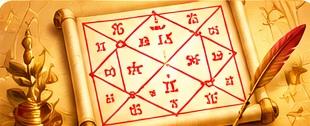
Venus and Jupiter are the two planets most often discussed in marriage astrology. Venus is associated with love, attraction and taste; Jupiter with wisdom, growth and commitment. In a birth chart, their condition can add nuance to a partnership reading. They are not magic switches that guarantee romance or marital bliss, but they are useful symbols for understanding how affection and commitment show up in your life.
This article explains their traditional roles, how their placement is interpreted, and the myths worth leaving behind.
Venus: the grammar of affection
Venus (Shukra) governs love, beauty, pleasure, art and relational style. In a partner reading, Venus describes what you find attractive, how you express affection, and what makes you feel valued. A Venus in a water sign may express love through emotional attunement; a Venus in an earth sign through practical care; an air Venus through conversation; a fire Venus through enthusiasm and adventure.
Venus also describes aesthetic taste, which is why it appears in discussions of appearance. Traditional texts associate Venus with softness, charm and attractiveness. These associations are cultural and symbolic, not a reliable way to predict a real person's face.
Jupiter: the architecture of commitment
Jupiter (Guru) governs wisdom, ethics, growth and blessings. In marriage, it is often read for the quality of commitment, family orientation and the ability to grow together. A well-placed Jupiter may indicate generosity, patience and a sense of purpose in partnership. An afflicted Jupiter may indicate the need to examine beliefs and expectations.
Jupiter is also associated with tradition and teachers. In a family context, it can describe the values that shape a marriage, including religious or cultural expectations. Those expectations are worth discussing explicitly rather than assuming they align.
Placement, dignity and aspects
Interpretation depends on the sign, house, aspects and condition of each planet. A Venus in its own sign may express affection more easily; a Venus in a difficult placement may need more conscious effort. A Jupiter in the seventh house may emphasise partnership and commitment; a Jupiter in the twelfth may emphasise private or spiritual dimensions of marriage.
Retrogression, combustion and aspects from Saturn or Mars modify the picture. A simplistic reading that ignores these factors is only skimming the surface. This is one reason a full chart reading is more useful than a Sun-sign horoscope.
What the combination can suggest
| Combination | Traditional emphasis | Practical question |
|---|---|---|
| Venus and Jupiter together | Affection joined with commitment | Do you balance romance with long-term planning? |
| Venus strong, Jupiter weak | Attraction and taste, but commitment needs work | What makes you feel secure enough to commit? |
| Jupiter strong, Venus weak | Duty and growth, but affection may need expression | How do you show love in ordinary ways? |
| Both afflicted | Themes of disappointment or delay | What patterns from past relationships need attention? |
These are broad patterns, not predictions. A chart is a conversation between many factors, and a single combination should not be read in isolation.
Venus, Jupiter and timing
Some astrologers use the dasha periods of Venus and Jupiter as potential marriage windows. The logic is that these planets activate love and commitment themes. In practice, a dasha period can last for years, so it describes a broad season rather than a date. Transits add another layer but still do not produce certainty.
If a reading gives you a precise marriage date based only on Venus and Jupiter, ask what else was considered. A responsible answer will include the seventh house, its lord, the navamsa and current transits.
Common myths
- “Venus in the seventh guarantees a beautiful spouse.” It describes attraction and relational style, not a person's appearance.
- “Jupiter always protects marriage.” It can support commitment, but it does not override behaviour or compatibility.
- “A weak Venus means no love.” It may indicate a different love language or a need for conscious effort.
- “Venus-Jupiter conjunction means a perfect match.” It is one combination among many, and perfection is not a meaningful standard.
How to use these symbols
Read Venus for what makes you feel loved and Jupiter for what makes you feel committed. Then discuss those needs with a partner. If Venus wants daily affection and Jupiter wants long-term planning, you may need to build rituals that satisfy both. That is more useful than waiting for a planet to solve the relationship.
A checklist for reading Venus and Jupiter
When you see a claim about Venus or Jupiter in a report, ask five questions before you take it seriously.
One: which sign and house? A planet's expression depends heavily on where it sits. Venus in Taurus behaves differently from Venus in Scorpio, and both behave differently depending on the house they occupy. A report that mentions the planet without the placement is not saying much.
Two: what is the planet's condition? Is it exalted, debilitated, retrograde, combust or aspected by Saturn or Mars? These conditions modify the interpretation. A simplified report may skip them, which is another reason to treat it as a sketch rather than a full reading.
Three: which house does it rule? Venus rules Taurus and Libra; Jupiter rules Sagittarius and Pisces. The houses those signs occupy in your chart show where the planet's themes play out. This is often more specific than the planet's own house placement.
Four: is it active in the dasha? A planet can be strong in the chart but not currently emphasised in your life. Timing matters. A Venus dasha may highlight romance themes; a Jupiter dasha may highlight commitment and growth.
Five: does the interpretation match your experience? This is the most important check. If a claim about your affection style feels wrong, it may be wrong, or it may be describing a part of you that you have not examined. Sit with it rather than accepting or rejecting it immediately.
What to do with a difficult placement
People often panic when they read about an afflicted Venus or Jupiter. A difficult placement is not a curse. It can describe a theme that requires attention: learning to express affection, examining unrealistic expectations, or building commitment gradually. Those are growth areas, not verdicts.
A responsible astrologer will explain the specific factors, avoid fear-based language, and suggest reflection rather than expensive remedies. If a reading tells you that your marriage is doomed unless you buy a gemstone, walk away.
The most useful response to a difficult placement is a conversation. What does commitment mean to you? How do you show love when you are tired? What beliefs about marriage did you inherit? Those questions do more for a relationship than any planetary remedy.
A short practice for couples
Sit down together and answer four questions inspired by Venus and Jupiter. First: How do I know you love me on an ordinary day? Second: What makes you feel committed, beyond words? Third: When we disagree, what helps you feel safe? Fourth: What do we want to build together over the next five years?
Write your answers separately, then compare. Do not try to score them or match them to a chart. The goal is to discover where your assumptions differ. Most couples find at least one gap: one person feels loved through time together, the other through practical help; one feels committed through planning, the other through daily reassurance.
Once you see the gap, choose one small change each. It might be a weekly check-in, a shared calendar, or a rule that difficult conversations happen after dinner rather than late at night. Small rituals are more useful than grand declarations.
Astrology can offer the vocabulary for this conversation, but the conversation itself is the remedy. Venus and Jupiter are symbols of affection and commitment; the practice is how those symbols become real.
For a broader view, read understanding the seventh house and future marriage prediction through kundli.